CMV in pregnancy: what every pregnant mum should know
In plain English
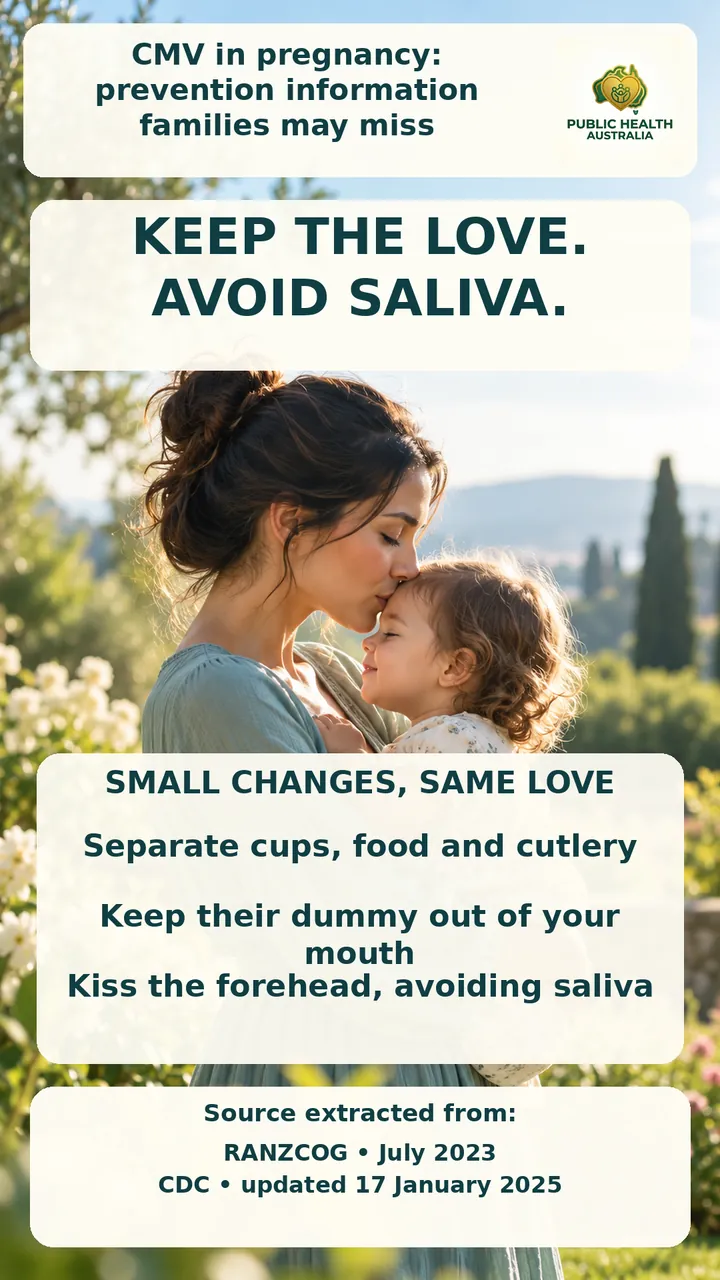
Cytomegalovirus (CMV) is a common virus that can spread through young children's saliva and urine, often without symptoms. During pregnancy it can pass to the baby and sometimes cause hearing loss or developmental problems. You can lower the risk. Wash your hands with soap and water after nappy changes or wiping a child's nose or drool, and clean toys and surfaces. Avoid sharing food, cups or cutlery with young children, keep their dummy out of your mouth, and kiss their forehead instead of their lips.
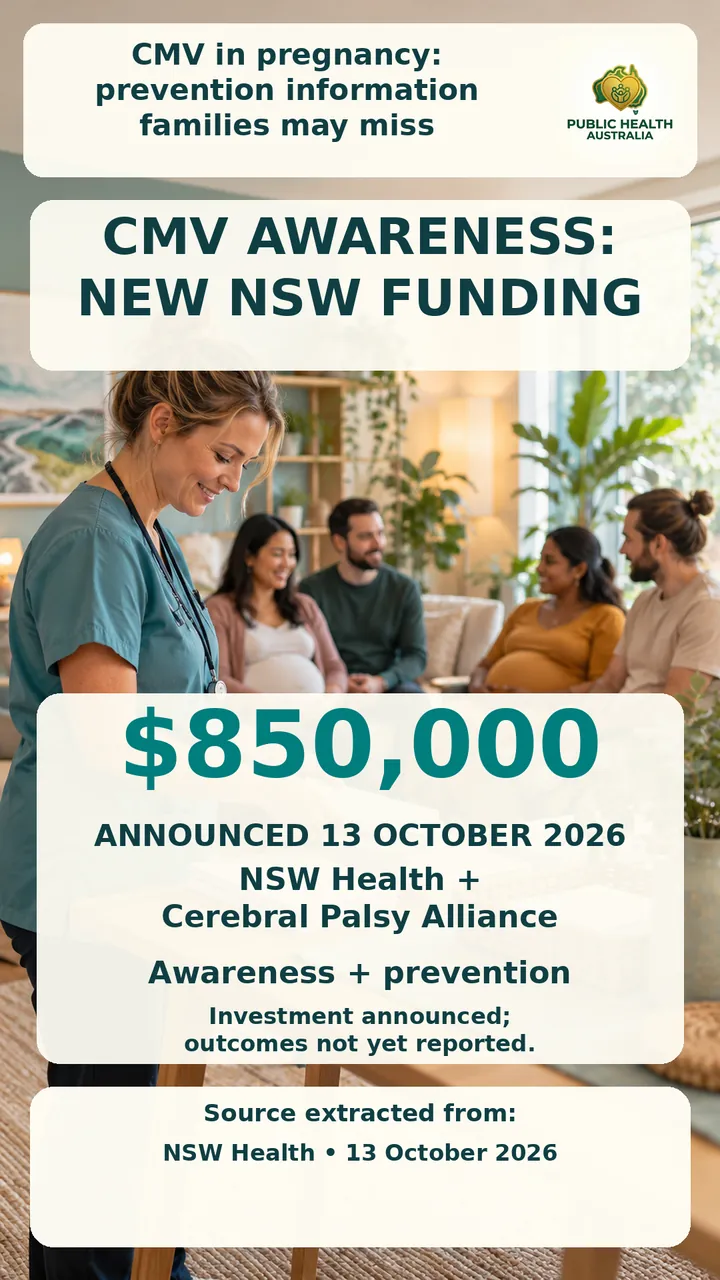
On 13 October 2026, NSW announced $850,000 for CMV awareness and prevention, working with Cerebral Palsy Alliance. Guidance recommends information before pregnancy or during antenatal care, so the campaign should measure whether families get understandable advice early, including in their preferred language. These steps reduce risk but cannot remove it, and infection does not mean a parent did anything wrong. Ask your GP or midwife about CMV prevention and whether testing suits you.
Key numbers
- $850,000: NSW funding for CMV awareness and prevention, announced 13 October 2026.
- Saliva and urine: the main ways young children can pass on CMV.
- Risk reduction, not zero risk: hygiene steps lower the chance of infection but cannot remove it.
Sources
These are the sources named in the video and its description.
- NSW Health: Funding boost to increase awareness and prevention of CMV (13 October 2026)
- RANZCOG: Prevention of congenital cytomegalovirus infection (interim update July 2023)
- CDC: CMV in newborns (updated 17 January 2025)
Last checked: 30 October 2026. This is general information, not medical advice.
Spot an error? Message us with the page link and, if you can, a link to the source. We check every report and correct mistakes openly.